
Jul 8, 2026 ● Lori Holloway
How to Explore and Choose the Right Tech Career Path Early On
Your First Career Choice Isn’t a Final Destination
Starting a tech career can feel both exciting and overwhelming.
With so many possible paths, it’s natural to question whether you’ve made the right choice. But most tech careers don’t follow a straight line—they evolve through experimentation, pivots, and discovery.
What sets successful professionals apart is the combination of skills, experiences, and perspectives they bring.
People enter tech through many routes—degrees, certifications, bootcamps, self‑study, hands‑on roles, or career shifts. There’s no single formula for success, so as you move forward, it’s essential to focus on what truly drives your passion and motivation.
Start With What Actually Interests You
When exploring a tech career, it’s easy to focus on what’s in demand right now. But long‑term success often comes down to one thing: doing work you genuinely enjoy.
Start by reflecting on what sparks your curiosity, how you solve problems, how you collaborate, and which environments energize you.

Ask yourself:
- Do I enjoy building new solutions or improving existing systems?
- Am I drawn to problem‑solving, data, user experience, or explaining complex ideas?
- Do I thrive with structure, creative freedom, fast‑paced teams, or focused independent work?
- What kinds of work give me energy and purpose?
There are no right or wrong answers. These questions help reveal where your strengths, interests, and work style align—and that alignment is where lasting growth, confidence, and satisfaction begin.
Get Curious About the Different Roles in Tech
One of the biggest misconceptions about tech is that there's only one path to follow.
In reality, technology is a broad field with roles that align with different skills, interests, and ways of working.
Whether you're a detail-oriented analyst, a creative problem-solver, or a collaborative team player, there's a place for you in tech.
With so many opportunities to explore, learning about different roles can help you identify where your skills, strengths, and interests align.
Here are a few examples:

- Software Development: Building the applications and systems people use every day
- IT & Technical Support: Helping users solve problems and keeping technology running smoothly
- Cybersecurity: Protecting systems, networks, and data while responding to real‑world threats
Networking & Cloud Operations: Designing, building, and maintaining the infrastructure behind modern technology

- Data Analysis: Turning information into insights that influence decisions
- UX/UI Design: Creating digital products that are intuitive, accessible, and enjoyable to use
- Quality Assurance: Testing, validating, and improving products before they reach users
- Product or Project Management: Bringing people, priorities, ideas, and timelines to deliver results
Interested in exploring any of these paths? Cisco Networking Academy offers certification-aligned pathways that map each role to the real skills and courses behind it—so you can see exactly what building expertise looks like, step by step.
You don’t need to figure everything out at once—take it one step at a time and let your path unfold.
Build Your Tech Career Roadmap
Start by exploring roles that spark your curiosity and align with your skills, interests, and work style.
As your focus sharpens, invest in building both technical expertise and transferable strengths.
Technical depth matters—but long‑term success comes from a balanced toolkit: the ability to build, create, and innovate, paired with transferable skills that enable you to communicate, collaborate, and adapt.
Every skill you develop adds flexibility and opens doors to roles that may not even exist yet.
Employers value this balance, especially early in a career, where potential often matters as much as experience.

Anchor your exploration by asking:
- What problems do I enjoy solving?
- Which environments help me do my best work?
- Where are my strengths, and where can I grow?
- What long‑term goals can tech help me reach?
Through reflection and exposure, patterns emerge and the right roles come into view.
A tech career isn’t a fixed destination—it’s a journey of discovery.
Broad exploration builds early momentum and lasting adaptability, helping you make smarter choices, grow with confidence, and evolve as technology changes.
Careers fueled by curiosity stay resilient, relevant, and ready for what’s next.
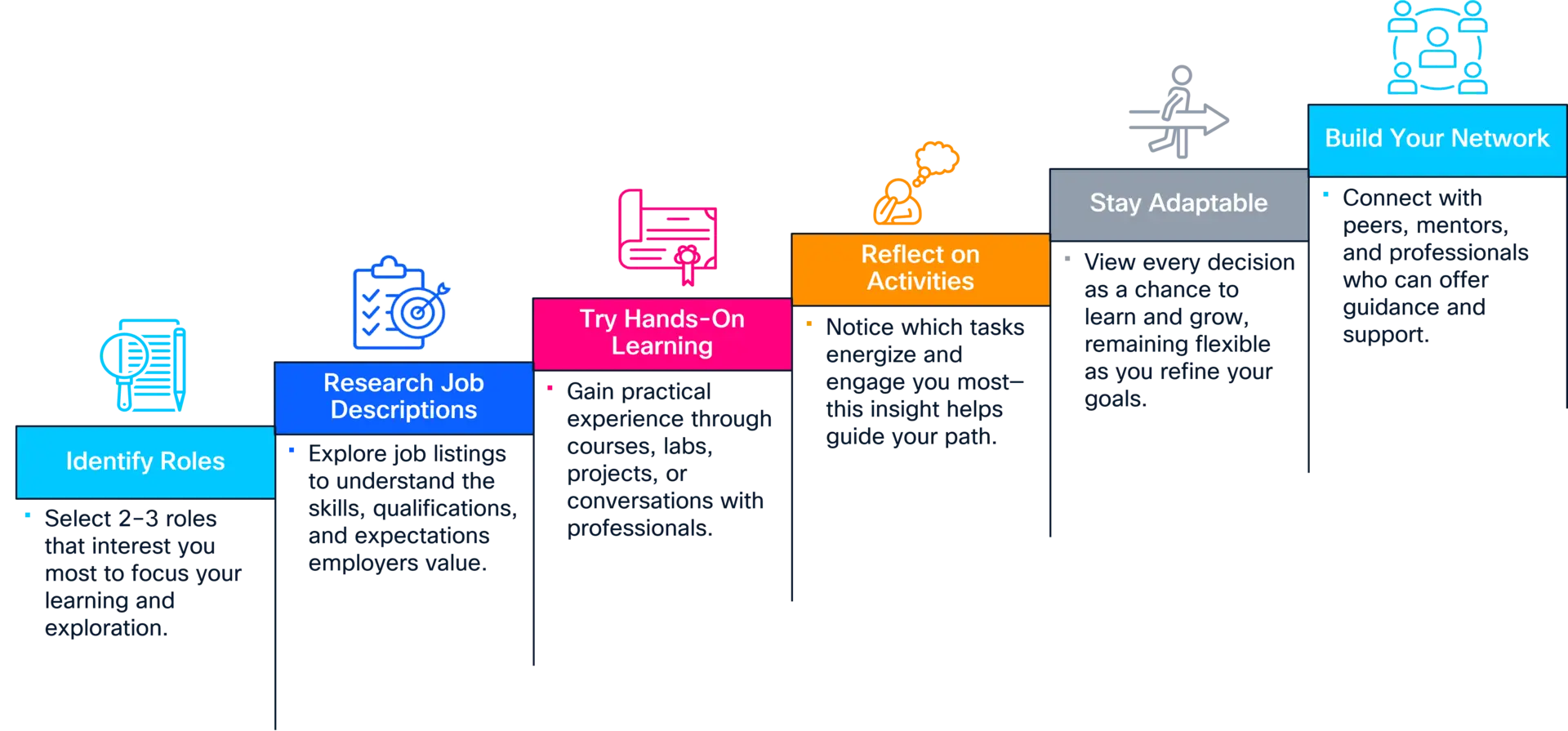
6 Steps to Discover Your Tech Career Potential
Move from curiosity to clarity with a few key steps to help you identify your ideal role, build your skills, and grow.
Complement Your Journey with The Discovery Blueprint
To help you put these steps into practice, we created The Discovery Blueprint—a practical guide that walks you through identifying your fit, building your skills, and gaining momentum in your tech career.
Use it alongside these steps to stay focused and confident as you explore your path.
Final Thought
Your career path doesn't need to be perfect—it needs momentum.
Growth comes from exploring, learning, adapting, and taking action.
You don't have to have every step mapped out before you begin. The opportunities that shape your future often appear after you've taken the first step, so start where you are and trust the momentum you create.
Start Your Tech Journey
Exploring a tech career is just the beginning.
Let Cisco Talent Bridge help you turn your skills and interests into real opportunities that align with your goals. Take charge of your future—move from exploration to opportunity.