Jul 8, 2026 ● Lori Holloway
What Actually Makes a Hire "Job Ready"? A Strategic Look at Talent
"Job ready" is one of the most common phrases in hiring—and one of the most difficult to define consistently.
For some hiring managers, it means technical proficiency. For others, it means communication skills, adaptability, or the ability to contribute with minimal support.
In reality, job readiness is usually a combination of these factors, with the balance varying by role, team, and organization.
The challenge arises when hiring teams use different definitions of job readiness.
Evaluation becomes inconsistent, and candidates who appear qualified on paper may not succeed in the role.
A more effective approach is to evaluate candidates using a shared framework.
The five questions below can help hiring teams focus on what matters most: a candidate's ability to succeed in the role—not just the credentials listed on their resume.
Five Questions That Define Job Readiness
1. Can They Perform the Core Tasks?
This is often the first question hiring teams ask—and for good reason.
Can the candidate demonstrate the technical skills required to perform the role today? The key word is demonstrate.
Understanding a concept is not the same as applying it. Focus on how candidates explain their experience, decisions, and results.

Consider asking:
- What was the objective?
- What tools or technologies were used?
- What decisions did you make along the way?
- What was the outcome?
For early-career candidates, hands-on labs, technical projects, certifications, and structured learning programs, like Cisco Networking Academy can provide meaningful evidence of current capability.
2. Can They Learn Quickly?
Technology evolves constantly. New tools emerge, priorities shift, and unexpected challenges arise.
The ability to learn and adapt is often a strong indicator of long-term success.
Ask candidates to describe a situation where they had to learn something new, solve an unfamiliar problem, or work through uncertainty.

Consider:
- How did they approach the challenge?
- What obstacles did they encounter?
- How did they adapt?
- What did they learn?
The quality of their response often provides valuable insight into how they will handle future challenges.
Candidates who have pursued self-directed learning, completed hands-on labs, earned certifications, or developed skills outside traditional work environments frequently demonstrate this adaptability.
3. Can They Work Effectively with Others?
Technical expertise is important, but success in most roles also depends on communication and collaboration.

Strong candidates can:
- Explain technical concepts clearly
- Communicate with different audiences
- Collaborate across teams and functions
- Navigate disagreements constructively
- Contribute positively to team outcomes
These skills are particularly important in global organizations, where teams often work across regions and time zones.
Pay attention not only to what candidates say, but how they communicate throughout the interview process.
Their ability to explain ideas, respond to questions, and engage in discussion can reveal a great deal about how they will work with colleagues, customers, and stakeholders.
4. Can They Demonstrate Their Skills?
Strong evaluations include evidence of how candidates apply their knowledge in practice.

Useful examples may include:
- Technical projects
- Portfolios
- Hands-on labs
- Certifications
- Open-source contributions
- Documentation or case studies
For early-career talent, this kind of evidence is often the most meaningful differentiator available.
A candidate who can show you what they have built, explain the decisions they made along the way, and describe what they learned from the experience is giving you a far richer picture of their capability than their employment history alone could provide.
Cisco Talent Bridge helps surface this type of evidence through skills, certifications, and digital badges.
5. Can They Grow with the Role?
Hiring is not only about what a candidate can do today—it is also about their potential to grow as responsibilities, technologies, and business needs evolve.
Technical skills can get someone started, but continued growth often depends on curiosity, initiative, and a commitment to learning.

Consider asking:
- What are you currently learning?
- What skills do you want to develop next?
- How are you working toward those goals?
- What excites you most about this role from a learning perspective?
The answers can provide insight into how candidates are likely to develop over time and contribute beyond their initial responsibilities.
As Kelly Jones, Cisco's Chief People Officer, has noted, true job readiness sits at the intersection of strong foundations and a commitment to continuous growth.
Putting the Five Questions to Work
These questions are not intended to be a rigid scoring system.
They provide a shared framework that helps hiring teams evaluate candidates consistently across interviewers, roles, and regions—using evidence rather than assumptions.
Job Readiness Evaluation Checklist
As you evaluate candidates, ask yourself:
☐ Can they perform the core tasks?
- Can they demonstrate the technical skills and knowledge needed to succeed in the role today?
☐ Can they learn quickly?
- Have they shown the ability to adapt, solve unfamiliar problems, and learn new skills when faced with change or uncertainty?
☐ Can they work effectively with others?
- Can they communicate clearly, collaborate across teams, and contribute positively in different working environments?
☐ Can they demonstrate their skills?
- Can they provide evidence of their capabilities through projects, labs, certifications, portfolios, or other practical work?
☐ Can they grow with the role?
- Do they demonstrate curiosity, initiative, and a commitment to continuous learning and professional development?
When hiring teams consistently evaluate these five areas, they gain a more complete view of a candidate's readiness to contribute today and grow over time.
This approach can also help identify strong candidates who might otherwise be overlooked when decisions rely too heavily on credentials, job titles, or years of experience alone.
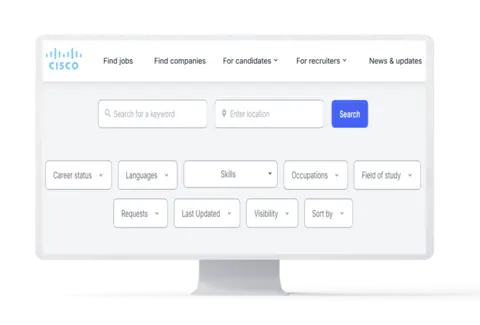
See the Full Picture of Candidate Potential
Cisco Talent Bridge helps employers gain visibility into candidates' skills, certifications, badges, and learning history to support informed hiring decisions.
This post reflects general hiring guidance informed by global industry practice.
Because employment regulations and hiring norms vary by region, we recommend reviewing hiring
decisions with your local HR team to ensure alignment with your specific country's requirements.