
Sep 1, 2026 ● Lori Holloway
Before You Say No: Five Questions That Can Help You Spot Overlooked Talent
In today's talent market, hiring challenges aren't always caused by a lack of talent. Sometimes they're caused by talented people being screened out before their capabilities are fully understood.
When roles need to be filled quickly, it's natural to prioritize candidates whose backgrounds align closely with every requirement. But before passing on an early-career candidate, it's worth asking a few additional questions.
The goal isn't to lower hiring standards.
It's to make sure your hiring process isn't overlooking talent that could create real value for your organization.

1. Am I screening for experience or evidence of capability?
Experience can be a strong indicator of readiness, but it isn't the only one.
Many early-career professionals build relevant skills through certifications, technical training, internships, apprenticeships, projects, military service, volunteer work, and other hands-on experiences.
Before making a decision, ask:
What evidence suggests this person can perform the most important aspects of the role?
The strongest hiring decisions consider demonstrated capability alongside relevant experience.
Consider: If this candidate had one additional year of experience but the same skills, would my assessment be different?
2. Have I looked beyond the signals I typically trust?
Resumes, job titles, and years of experience are familiar signals. They're also incomplete ones.
A project, portfolio, technical lab, certification, or skills assessment may reveal capabilities that traditional credentials fail to capture.
If this candidate followed a nontraditional path, would I recognize their potential as readily as someone with a conventional background?
Sometimes capable candidates are overlooked because their backgrounds don't match traditional expectations.
Consider: Which skills required for this role are demonstrated through evidence rather than titles?

3. Would a brief conversation challenge my first impression?
A resume provides information. A conversation provides context.
A short discussion about a project, challenge, or learning experience can reveal how someone thinks, learns, adapts, and solves problems.
Before moving on, ask:
Am I evaluating this candidate's capability, or my interpretation of their resume?
A brief conversation can sometimes reveal insights that aren't visible on a resume alone.
Consider: What's one question I could ask that would give me a fuller picture of this candidate's potential contribution?
4. Am I hiring for perfection or performance?
Most hiring teams have a picture of the ideal candidate in mind.
The reality, however, is that few successful hires check every box on day one. What matters most is whether someone can succeed in the role's core responsibilities and continue growing as business needs evolve.
Before moving on from a candidate, ask yourself:
Which requirements are truly essential for success, and which have simply become familiar expectations over time?
Distinguishing between the two can help uncover capable candidates who may otherwise be screened out and keep the focus on performance rather than perfection.
Consider: Which requirements are directly tied to success in the role, and which might be narrowing the talent pool without adding meaningful value?

5. What might we miss by passing on this candidate?
Hiring decisions naturally focus on risk.
What's missing? What gaps exist? What still needs to be learned?
Those questions matter. But so does another one:
What's the opportunity cost of saying no?
As organizations compete for skilled talent, some of the most promising candidates may be the ones who don't match every expectation on paper.
Not every early-career candidate will be the right fit. But some high-performing employees began as candidates whose potential wasn't immediately obvious.
Consider: If this person succeeds elsewhere, what qualities might another employer recognize that we did not?
A Different Way to Approach Hiring Decisions
None of this suggests that every early-career candidate should be hired.
It simply means that effective hiring isn't only about identifying risk. It's also about recognizing value that may not be immediately obvious.
As organizations expand talent pipelines and adopt skills-based hiring practices, one of the most valuable capabilities a hiring team can develop is the ability to distinguish between a candidate who lacks potential and a candidate whose potential hasn't yet been fully recognized.
Sometimes the question isn't whether a candidate checks every box.
It's whether we're asking the right questions before deciding they don't.
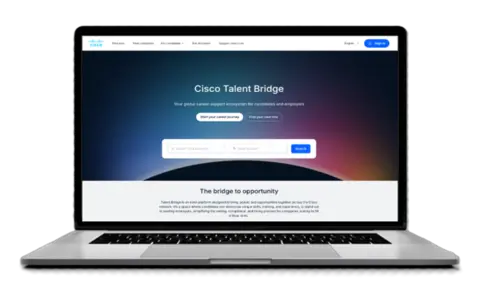
Discover Early-Career Talent Through Cisco Talent Bridge
Recognizing overlooked talent is one challenge. Knowing where to find it is another.
Talent Bridge helps employers connect with job-ready early-career professionals who have developed in-demand skills through technical training, certifications, workforce development programs, and hands-on experience.
Whether you want to strengthen your talent pipeline, fill critical roles, or connect with emerging talent from Cisco learning programs, Talent Bridge helps you find candidates with relevant skills and experience who are ready to contribute and grow.
This article reflects general hiring guidance informed by global industry practices. Because employment
regulations, data requirements, and hiring norms vary by country, organizations should review hiring processes
and decisions with their local HR and legal teams to ensure alignment with applicable requirements.