Jul 8, 2026 ● Lori Holloway
Where Skills Become Opportunity in the Cisco Ecosystem
Most hiring teams have well-defined processes—screening steps, interview frameworks, scoring rubrics, and approval workflows.
Job descriptions aim to attract the right candidates, and assessments try to surface the best talent. Yet many teams still find hiring slower, less precise, and less predictive of on-the-job success than they want.
The challenge isn’t lack of effort. Traditional hiring systems focus on where candidates have been—their employment history, credentials, and education—rather than on clear, practical evidence of what they can do today.
This gap has always existed. But as technology evolves faster than formal education can keep up, relying on traditional signals leaves many capable candidates overlooked.
Teams that don’t adapt risk missing out on a growing pool of skilled talent.
What Skills-Based Hiring Means in Practice
Skills-based hiring shifts the focus from credentials and past roles to demonstrated capability—what candidates have actually built, learned, and applied relevant to your open roles.

This means:
- Writing job descriptions that clearly define the work to be done—the problems to solve, skills needed, and expected outcomes—rather than just listing credentials.
- Building screening criteria that emphasize evidence of applied skills alongside qualifications.
- Using tools that surface this evidence in an accessible way, so hiring teams don’t have to guess a candidate’s ability based on job titles alone.
Credentials and experience remain important but serve as context—not barriers. The real focus is practical skill and potential.
Why Early-Career Hiring Needs Skills-Based Approaches
Early-career candidates often lack extensive employment history, making traditional evaluation methods less effective and leading to missed opportunities.
Instead, these candidates provide clear evidence of self-driven development—such as certifications earned, labs completed, projects built, and active participation in learning communities.
Cisco’s education programs, like Cisco Networking Academy and the Cisco Learning Network, showcase how candidates build, demonstrate, and apply skills through hands-on learning and ongoing engagement.
Hiring teams that recognize and value these signals gain a real advantage in identifying capable early-career talent with strong growth potential.
How Cisco Talent Bridge Supports Skills-Based Hiring at Scale
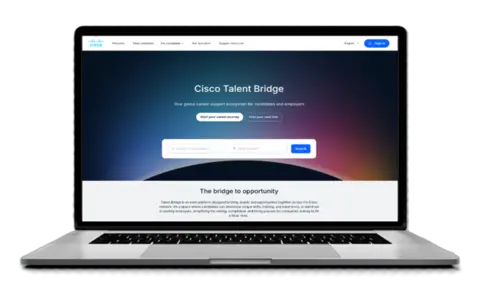
Cisco Talent Bridge offers a fresh approach to discovering talent by focusing on what candidates can actually do—not just what appears on their resumes.
By highlighting real skills, certifications, and hands-on experiences early in the hiring process, it helps teams see beyond traditional credentials.
This shift allows organizations to tap into a broader, more diverse pool of candidates and make more informed decisions—without adding complexity to already busy workflows.
As hiring evolves, having clearer insight into candidates’ true capabilities could be the difference between settling for the usual and finding the exceptional.
The Strategic Advantage
Skills-based hiring isn’t just a process change—it unlocks access to a wider, more diverse talent pool.
It recognizes capable people who may not fit traditional molds but have invested deeply in practical skills.
Organizations embracing skills-based hiring build stronger, more resilient teams by tapping into the full range of human potential—often missed by credential-focused filters. This broader access drives long-term success.

The hiring landscape is shifting.
Early adopters who integrate clear skill signals into their process and expand where and how they find talent will gain a lasting edge in building the teams they need.
This shift doesn’t require a complete overhaul.
It starts with better information—earlier—about what candidates can truly do.
What Could Your Organization Achieve with a Skills-First Approach?
Potential isn't always visible through traditional hiring approaches.
Cisco Talent Bridge helps employers uncover candidate skills, expand their talent pipelines, and make more informed hiring decisions.
Discover early-career talent ready to contribute and grow.
This post reflects general hiring guidance informed by global industry practice.
Because employment regulations and hiring norms vary by region, we recommend reviewing hiring
decisions with your local HR team to ensure alignment with your specific country's requirements.