Jul 8, 2026 ● Lori Holloway
Why Combining Deep Expertise with Broad Adjacent Knowledge Makes You More Valuable
What makes someone stand out in today's technology job market?
It's not just deep expertise—it's the ability to connect that expertise to the bigger picture.
Employers need professionals who can solve problems, collaborate across teams, and adapt as technology evolves.
That's why many of the most successful tech professionals combine deep knowledge in one area with a practical understanding of related disciplines.
This combination makes them more effective contributors, stronger collaborators, and better prepared for long-term career growth.
The good news for early-career talent is that you don't need to know everything right away.
Focus on building a strong foundation in one area while developing enough knowledge of adjacent fields to understand how your work contributes to broader team and business goals.
Depth Gets You Hired. Breadth Helps You Grow.
Deep expertise demonstrates your ability to deliver results in a specific area—whether that's software development, cloud infrastructure, cybersecurity, data analytics, quality assurance, or another technology discipline.
Employers value professionals who can take ownership and solve problems effectively.
But your impact often grows when you understand the areas that connect to your work.

For example:
- A developer who understands product strategy can build features that better address user needs.
- A cloud engineer with security knowledge can make better architectural decisions.
- A data analyst who understands business objectives can provide more meaningful insights.
Breadth doesn't replace depth—it strengthens it.
Why This Matters Early in Your Career
When you're starting out, it's easy to feel pressure to learn every new technology, tool, or trend.
While curiosity is valuable, trying to learn everything at once can make it harder to build confidence and expertise.
A more effective approach is to choose a primary area of focus and develop enough knowledge of related disciplines to understand how everything fits together.
This approach can help you:
- Collaborate more effectively with different teams.
- Make better-informed decisions.
- Adapt more quickly as technologies, tools, and roles evolve.
Employers aren't only looking for people who can complete tasks.
They also value professionals who can connect ideas, solve problems, communicate across functions, and continue learning throughout their careers.
A Simple Framework for Your Growth
Think about your development in three layers:

- Core skill: The expertise you want to be known for.
- Adjacent knowledge: The disciplines that work closely with your area of expertise.
- Business context: Understanding how your work creates value for customers, users, and the organization.
For example, if your core skill is software development, you might learn the basics of testing, product design, cloud technologies, and agile ways of working.
If your focus is data, you could explore data visualization, dashboards, databases, statistics, SQL, and how organizations use data to make decisions.
A simple rule to remember: go deep in one area and stay curious about the areas around it.
Turning Learning Into Career Opportunities
As your skills grow, it isn't always obvious what to learn next or how your capabilities align with available opportunities.
Tools like Cisco Talent Bridge can help by comparing your profile to specific role requirements, helping you understand where your skills align with employer needs and where additional development may strengthen your fit.
This can help you prioritize learning goals and make more informed career decisions.

To continue building your breadth:
- Strengthen your core skill through hands-on practice and real projects.
- Learn the fundamentals of one or two related disciplines.
- Connect with professionals in different roles to better understand their perspectives.
- Seek opportunities to work with new tools, teams, and business challenges.
Over time, these experiences help you build both technical expertise and the broader perspective that employers value.
Your Path Forward: Build with Purpose
Don't rush to become an expert in everything.
Start by developing strong expertise in one area, then intentionally expand your knowledge into related disciplines.
Pay attention to how your work connects to team goals, customer needs, and business outcomes.
The most successful early-career professionals aren't necessarily the ones who know the most—they're the ones who understand their strengths, create value, and continue learning with purpose.
Your career is a journey, not a sprint.
Stay curious, be intentional in your growth, and look for opportunities to connect your expertise to the bigger picture.
That's how you become more adaptable, more impactful, and better prepared for long-term success in a rapidly changing industry.
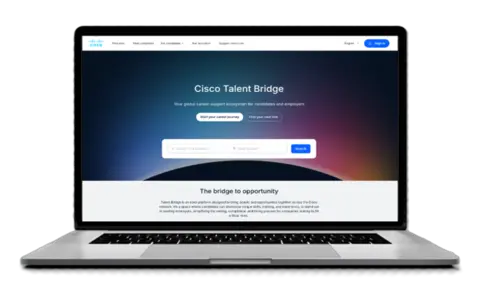
The skills you build matter. How you showcase them matters just as much.
Cisco Talent Bridge helps you highlight your expertise, demonstrate complementary skills, and connect with opportunities that value both deep specialization and continuous learning.