Jul 8, 2026 ● Lori Holloway
The Discovery Blueprint, Part 1: Finding Your Place in Tech
Technology careers today aren’t defined solely by degrees or traditional paths.
Employers are placing greater value on skills, hands-on experience, problem-solving abilities, and proof that you can apply what you've learned in real-world situations.
Whether you’re a student, self-taught learner, career changer, or early-career professional, your unique experiences can be a strong advantage.
This blueprint will help you explore tech career paths, find your strengths, build the skills employers want, plan for long-term growth, and gain the confidence to go after opportunities that fit your goals.
Phase 1 — Know Yourself Before Choosing a Career Path
Before focusing on job titles, understand how you naturally approach problems, learning, and work.
Identify Your Natural Strengths
The categories below are designed to help you identify how you naturally approach problems and where your strengths fit within the technology industry. The roles listed are examples to guide you—not fixed career paths.
Starting Roles represent common entry points for those with these strengths, while Related Opportunities suggest other areas you might explore as your skills, interests, and experience develop.
Which description best reflects how you instinctively tackle challenges?

The Builder: You enjoy building from scratch, creating new solutions, and bringing ideas to life.
- Starting Roles: Junior Software Developer, Front-End Developer, QA Automation Associate, Junior Hardware Engineer
- Related Opportunities: Full-Stack Engineer, Infrastructure & Cloud Architect, Solutions Engineer, DevOps & Site Reliability Engineer
- The Problem Solver: You like troubleshooting issues and fixing what's broken.
- Starting Roles: Cloud Support Associate, Junior Quality Assurance Engineer, Technical Support Engineer, Security Operations Center (SOC) Analyst
- Related Opportunities: Cybersecurity Analyst, Incident Response Manager, Cloud Infrastructure Engineer, Site Reliability Engineer

The Organizer: You enjoy creating structure, managing details, and improving processes.
- Starting Roles: AI Operations Coordinator, Business Operations Analyst, IT Project Coordinator, Associate Product Operations Specialist
- Related Opportunities: Infrastructure & Cloud Architect, Technical Program Manager, Cloud Site Reliability Manager, IT Service Delivery Manager
- The Translator: You can explain complex technical concepts in ways others understand.
- Starting Roles: AI Product Support Specialist, Associate Sales Engineer, Product Marketing Coordinator, Junior UX Content Writer
- Related Opportunities: Technical Product Manager, Presales Engineer, Developer Relations Engineer, Solutions Architect

The Optimizer: You naturally look for ways to automate, streamline, and improve efficiency.
- Starting Roles: Cloud Support Associate, Automation Support Specialist, IT Operations Analyst, Network Operations Center (NOC) Analyst
- Related Opportunities: Machine Learning Operations Engineer, Observability & Performance Engineer, Site Reliability Engineer, DevOps Engineer
- The Pattern Seeker: You enjoy uncovering trends, anomalies, and insights hidden in data, logs, or user behavior.
- Starting Roles: Data Analyst, Business Intelligence (BI) Analyst, Junior QA Automation Engineer, Security Analyst
- Related Opportunities: Data Scientist, AIOps / MLOps Engineer, Analytics Manager, Digital Forensics & Incident Response (DFIR) Specialist
Identify Your Energy Drivers
Ask yourself:
- Do you thrive in collaborative environments or focused independent work?
- What type of challenges keep you engaged?
- What activities make you lose track of time?
- When do you feel most energized and productive?
Define Your Why
Your motivation will help sustain momentum when learning becomes challenging.
Common drivers include:
- Financial stability
- Career growth
- Continuous learning
- Creative problem-solving
- Flexibility
- Making a meaningful impact
Don't Overlook Your Transferable Skills
Many professionals already possess valuable transferable skills gained through school, military service, volunteering, customer service, hospitality, retail, healthcare, or other industries.
Examples include:
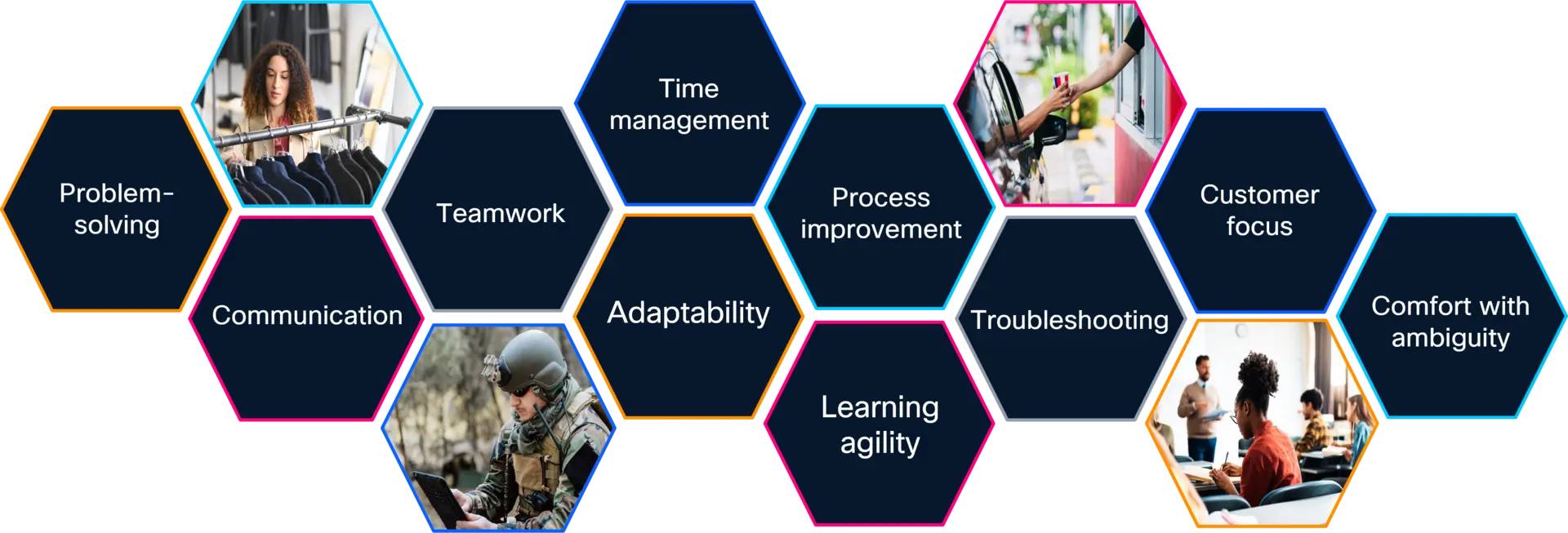
These skills are often just as important as technical knowledge when starting a career in technology.
Quick Exercise
List three projects, assignments, jobs, or achievements you're proud of. For each one, identify:
- The problem you solved
- The role you played
- The skills you used
- What you enjoyed most
These patterns often reveal stronger career direction than job titles alone.
Phase 2 — Explore Before You Commit
The fastest way to discover your career fit is through experimentation and hands-on learning.
Research a Day in the Life
Job descriptions only tell part of the story. To understand what a role really involves:
- Watch "day in the life" videos.
- Attend webinars and virtual career events.
- Follow professionals on LinkedIn.
- Conduct informational interviews or curiosity conversations.
- Join tech communities and observe discussions.
Focus on what professionals actually do daily—not just their job titles.
Reverse-Engineer Tech Roles
Pick 4–5 job postings that interest you and track the following in a simple spreadsheet:
- Required technical skills
- Certifications
- Tools and technologies
- Key responsibilities
- Communication and collaboration needs
Look for patterns across postings. These reveal what employers consistently value and which skills are in demand.

Run Small Career Experiments
Discover your strengths and build job-ready skills with hands-on technology challenges:
- Cybersecurity Challenge: Review a sample configuration, cloud setup, or code snippet to identify the top three security risks and suggest fixes, strengthening your skills in spotting system vulnerabilities.
- Systems Thinking Exercise: Map the technology behind a simple task (like buying shoes online), breaking down each step to understand how the app, network, and data work together to complete the order.
- Technical Documentation Challenge: Write a clear, step-by-step README or user guide for a project to strengthen your problem-solving skills and practice translating complex technical details into simple, easy-to-follow instructions.
- Development Challenge: Build a simple website, script, or automation using beginner-friendly tools that solves a problem or demonstrates a concept, helping you build coding skills and gain experience with the full development process.
Seek Feedback Early
Regularly share your work with mentors, study groups, professional communities, forums, and peers.
Early feedback accelerates your learning, uncovers areas for improvement, and builds your confidence.
By asking specific questions and staying open to constructive advice, you create valuable opportunities to grow your skills and advance your career.
Follow Your Energy
Pay close attention to the activities that spark your curiosity, keep you engaged, and sustain your momentum.
When your work aligns with both your skills and interests, you’re more likely to find long-term satisfaction and success.
Use these insights to guide your career choices toward roles that truly energize and motivate you.
Career Exploration Tip
Don’t limit yourself to job titles you’ve already heard of—technology offers a wide range of career paths, many of which may be new to you.
Take the time to explore different roles and discover opportunities that align with your unique skills and passions.
Consider market trends and areas of growing demand, but focus on roles that truly match your strengths and interests. This approach will help you build a meaningful and lasting career that fits who you are and where you want to go.
Phase 3 — Build Skills That Differentiate You
The strongest technology professionals combine technical expertise, business understanding, and essential professional skills. Here’s how you can build all three to stand out and succeed.
Build Technical Depth
Focus on mastering one or more core technical areas such as:
- Software Development
- Cloud Computing
- Networking
- Cybersecurity
- Data Analytics
- Artificial Intelligence
- Machine Learning
- UX/UI Design
Start by learning the fundamentals thoroughly before chasing every new trend. Hands-on experience is key—employers want to see that you can apply what you’ve learned to solve real problems.
Develop Career-Ready Skills
Technical knowledge alone won’t carry you far. Strengthen skills that are valuable across roles and industries, including:
- AI literacy and prompt engineering
- Data privacy and security awareness
- Business acumen to understand how technology creates value
- Critical thinking and problem-solving
- Digital literacy and adaptability
These skills help you contribute strategically and grow your career beyond just technical tasks.

Strengthen Your Professional Skills
Soft skills are often the difference between candidates with similar technical abilities. Focus on:
- Clear and effective communication
- Team collaboration across diverse groups
- Prioritizing tasks and managing time efficiently
- Adapting quickly to change and new challenges
- Documenting your work in detail
- Taking initiative and demonstrating leadership potential
- Committing to continuous learning and improvement
Employers highly value these abilities as they impact day-to-day success and long-term growth.
Keep a Learning Log
Track your journey by regularly recording:
- New skills you’ve learned
- Projects you’ve completed
- Certifications earned
- Feedback from mentors, peers, or supervisors
- Challenges you’ve overcome
- Your next goals for growth
A well-maintained learning log provides concrete evidence of your progress and is a powerful tool for resumes, interviews, LinkedIn profiles, and portfolio showcases.
You can use Talent Bridge to track your skills, certifications, and learning, helping you stay organized as you prepare to showcase your capabilities to employers.